

Representatives from different countries around the world gathered in the General Assembly Hall of the United Nations. On that day, everyone agreed to adopt the Convention on the Rights of Persons with Disabilities (CRPD).
For the first time, disability was viewed not only from a medical perspective but also as an issue of human rights, dignity, and social justice.
This change transformed the way society understands disability.
Disability does not define a person; rather, it is social, physical, and political barriers that can limit people’s opportunities to make choices and participate fully in society.
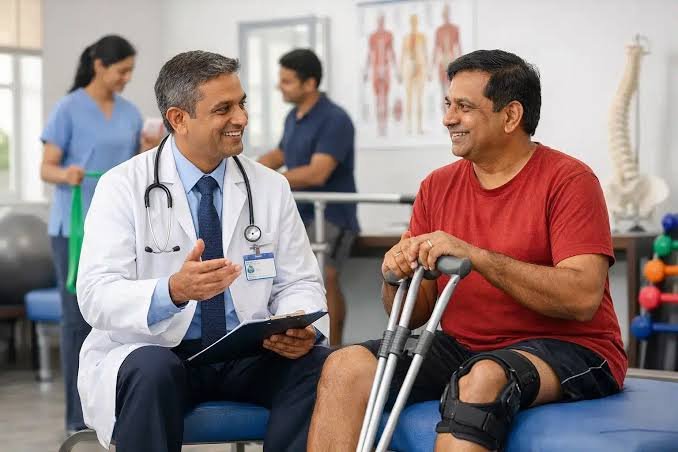
This is where Physical and Rehabilitation Medicine (PM&R) finds its true meaning. This field supports people with disabilities or chronic conditions not only by improving their physical functions but also by promoting independence, social participation, and inclusion.
In other words, the main goal is to provide every person with the necessary opportunities to make decisions, choose, and actively participate in daily life.
Today, according to the World Health Organization, more than 2 billion people worldwide need rehabilitation services.
Behind this number are real human stories — each with their own hopes, challenges, and achievements.
Physical and Rehabilitation Medicine is above all a people-centered medical practice, standing at the intersection of health, human rights, and social inclusion.
What is Physical and Rehabilitation Medicine (PM&R)?
Physical and Rehabilitation Medicine is a medical specialty aimed at:
Preventing complications related to loss of mobility or function;
Restoring lost abilities whenever possible;
Compensating for limitations through assistive devices (orthoses, prostheses, wheelchairs, and modern technologies);
Supporting people in achieving their life goals by helping them regain independence and build a daily life according to their wishes and abilities.
This includes:
Returning to work or education;
Participating in different activities;
Adapting living environments;
Taking part in social life.
Physical and Rehabilitation Medicine is a multidisciplinary field based on cooperation.
The process involves the patient, their family, and various healthcare professionals.
The team may include:
PM&R physicians;
Physiotherapists;
Occupational therapists;
Neuropsychologists;
Nurses and other healthcare specialists.
PM&R Physicians: Interview with Guy Letellier
How is all of this applied in real life?
To answer this question, we spoke with Dr. Guy Letellier.
He works at ESEAN APF France Handicap, a healthcare facility for children and adolescents located in the Nantes region of France.
His experience as a pediatrician, Physical and Rehabilitation Medicine physician, and director of a pediatric rehabilitation center allows him to share valuable insights into the real challenges of patient care.
Dr. Letellier, could you briefly describe your professional background?
I began studying medicine in Lille and later completed my specialist training at Poitiers University Hospital.
During this period, I studied Physical and Rehabilitation Medicine and obtained a master’s degree focused on neuromuscular diseases and clinical research.
After an inter-university rotation in Paris, I chose this complex, technical, and innovative field of medicine.
Later, I completed a two-year specialization program in Montreal and clinical training at Garches University Hospital.
This field requires continuous development, research, and the use of new medical and technological opportunities.
The goal is not only to help people live with disabilities but also to improve their quality of life through innovation.
What does your work involve?
The main objective is to restore a certain level of independence for patients, increase their participation in activities, and ensure optimal development for children.
This process is called rehabilitation or functional recovery.
It is similar to helping an athlete recover after an injury and regain their previous level of performance.
We cannot always completely cure a condition, but we can improve complex situations and help people live fuller lives.
What types of patients do you see at ESEAN APF France Handicap?
We work with children from 0 to 18 years old and sometimes with older patients.
We treat various temporary or complex forms of disability, including:
Musculoskeletal disorders;
Cognitive impairments;
Oncological diseases;
Neurological conditions;
Nutritional and respiratory problems;
Orthopedic disorders.
What is the most important quality in your profession?
Teamwork and humility.
It is also essential to be able to develop ideas and find solutions even for challenges that may seem impossible at first glance.
How can someone consult a PM&R physician?
Patients can make an appointment through a medical secretary.
For children, a referral is not always required.
It is important to clearly explain the reason for the consultation.
A patient may also be referred by a family doctor, therapist, or another specialist.
What does a PM&R consultation look like?
Like any medical consultation, it begins with an introduction.
Then a detailed discussion takes place to understand the patient’s condition, concerns, and goals.
The physical examination focuses mainly on functional limitations, but the key principle is:
“Using the abilities that remain to increase independence and participation in life.”
Together with the patient and/or their family, goals are identified and a strategy is developed to achieve them.
How do you work with other healthcare professionals?
It is a team effort.
It is similar to an orchestra or a sports team: everyone has their own role and contributes to achieving the best possible outcome.
During family meetings and multidisciplinary discussions, treatment strategies are developed based on jointly defined goals.
What does a rehabilitation program look like for patients with upper limb limitations?
Conditions such as elbow fractures, hand weakness, painful shoulders, or neonatal brachial plexus paralysis require specialized rehabilitation programs.
The goal is to help children regain functional movement and increase independence.
The program may include:
Physiotherapy to improve joint mobility;
Pain management techniques;
Occupational therapy to develop fine motor skills;
Proper positioning;
Movement coordination training.
These approaches can be combined with robotic and other assistive technologies.
Such devices help to:
Compensate for lost functions;
Reduce pain;
Activate muscles;
Retrain movement patterns.
Recent Advances in Rehabilitation and Mobility
In recent years, robotic technologies have significantly advanced.
Robotic systems help to:
Support walking;
Compensate for lost abilities;
Improve arm muscle strength.
Other areas of active research include:
Vibration therapy;
Mechanized spinal movement systems;
Augmented reality technologies;
Artificial intelligence-based sensor systems.
Development never stops, and curiosity and innovation remain essential.
Do robotic arms, exoskeletons, and smart wheelchairs change treatment approaches?
Yes.
These technologies create significant opportunities, but they must be used correctly with professional guidance.
Their effectiveness depends on clear goals and a multidisciplinary approach.
What are the main challenges in integrating people with disabilities into society?
The main goals are:
Changing society’s perception of people with disabilities;
Understanding that anyone can experience disability at some point in life;
Supporting family members who provide care;
Creating employment opportunities based on individual abilities and skills.
How do you see your profession developing in 10 years?
The future of this field may develop in different ways.
Today, there is a shortage of specialists in pediatric Physical and Rehabilitation Medicine.
In the future, I see physicians who remain empathetic, optimistic, and open to using new technologies to achieve ambitious goals.
This will be possible through motivated healthcare professionals and a society that supports patients and their families.
The main goal of Physical and Rehabilitation Medicine is not only to treat people but also to give them the opportunity to build a more independent, active, and meaningful life.
For the first time, disability was viewed not only from a medical perspective but also as an issue of human rights, dignity, and social justice.
This change transformed the way society understands disability.
Disability does not define a person; rather, it is social, physical, and political barriers that can limit people’s opportunities to make choices and participate fully in society.
This is where Physical and Rehabilitation Medicine (PM&R) finds its true meaning. This field supports people with disabilities or chronic conditions not only by improving their physical functions but also by promoting independence, social participation, and inclusion.
In other words, the main goal is to provide every person with the necessary opportunities to make decisions, choose, and actively participate in daily life.
Today, according to the World Health Organization, more than 2 billion people worldwide need rehabilitation services.
Behind this number are real human stories — each with their own hopes, challenges, and achievements.
Physical and Rehabilitation Medicine is above all a people-centered medical practice, standing at the intersection of health, human rights, and social inclusion.
What is Physical and Rehabilitation Medicine (PM&R)?
Physical and Rehabilitation Medicine is a medical specialty aimed at:
Preventing complications related to loss of mobility or function;
Restoring lost abilities whenever possible;
Compensating for limitations through assistive devices (orthoses, prostheses, wheelchairs, and modern technologies);
Supporting people in achieving their life goals by helping them regain independence and build a daily life according to their wishes and abilities.
This includes:
Returning to work or education;
Participating in different activities;
Adapting living environments;
Taking part in social life.
Physical and Rehabilitation Medicine is a multidisciplinary field based on cooperation.
The process involves the patient, their family, and various healthcare professionals.
The team may include:
PM&R physicians;
Physiotherapists;
Occupational therapists;
Neuropsychologists;
Nurses and other healthcare specialists.
PM&R Physicians: Interview with Guy Letellier
How is all of this applied in real life?
To answer this question, we spoke with Dr. Guy Letellier.
He works at ESEAN APF France Handicap, a healthcare facility for children and adolescents located in the Nantes region of France.
His experience as a pediatrician, Physical and Rehabilitation Medicine physician, and director of a pediatric rehabilitation center allows him to share valuable insights into the real challenges of patient care.
Dr. Letellier, could you briefly describe your professional background?
I began studying medicine in Lille and later completed my specialist training at Poitiers University Hospital.
During this period, I studied Physical and Rehabilitation Medicine and obtained a master’s degree focused on neuromuscular diseases and clinical research.
After an inter-university rotation in Paris, I chose this complex, technical, and innovative field of medicine.
Later, I completed a two-year specialization program in Montreal and clinical training at Garches University Hospital.
This field requires continuous development, research, and the use of new medical and technological opportunities.
The goal is not only to help people live with disabilities but also to improve their quality of life through innovation.
What does your work involve?
The main objective is to restore a certain level of independence for patients, increase their participation in activities, and ensure optimal development for children.
This process is called rehabilitation or functional recovery.
It is similar to helping an athlete recover after an injury and regain their previous level of performance.
We cannot always completely cure a condition, but we can improve complex situations and help people live fuller lives.
What types of patients do you see at ESEAN APF France Handicap?
We work with children from 0 to 18 years old and sometimes with older patients.
We treat various temporary or complex forms of disability, including:
Musculoskeletal disorders;
Cognitive impairments;
Oncological diseases;
Neurological conditions;
Nutritional and respiratory problems;
Orthopedic disorders.
What is the most important quality in your profession?
Teamwork and humility.
It is also essential to be able to develop ideas and find solutions even for challenges that may seem impossible at first glance.
How can someone consult a PM&R physician?
Patients can make an appointment through a medical secretary.
For children, a referral is not always required.
It is important to clearly explain the reason for the consultation.
A patient may also be referred by a family doctor, therapist, or another specialist.
What does a PM&R consultation look like?
Like any medical consultation, it begins with an introduction.
Then a detailed discussion takes place to understand the patient’s condition, concerns, and goals.
The physical examination focuses mainly on functional limitations, but the key principle is:
“Using the abilities that remain to increase independence and participation in life.”
Together with the patient and/or their family, goals are identified and a strategy is developed to achieve them.
How do you work with other healthcare professionals?
It is a team effort.
It is similar to an orchestra or a sports team: everyone has their own role and contributes to achieving the best possible outcome.
During family meetings and multidisciplinary discussions, treatment strategies are developed based on jointly defined goals.
What does a rehabilitation program look like for patients with upper limb limitations?
Conditions such as elbow fractures, hand weakness, painful shoulders, or neonatal brachial plexus paralysis require specialized rehabilitation programs.
The goal is to help children regain functional movement and increase independence.
The program may include:
Physiotherapy to improve joint mobility;
Pain management techniques;
Occupational therapy to develop fine motor skills;
Proper positioning;
Movement coordination training.
These approaches can be combined with robotic and other assistive technologies.
Such devices help to:
Compensate for lost functions;
Reduce pain;
Activate muscles;
Retrain movement patterns.
Recent Advances in Rehabilitation and Mobility
In recent years, robotic technologies have significantly advanced.
Robotic systems help to:
Support walking;
Compensate for lost abilities;
Improve arm muscle strength.
Other areas of active research include:
Vibration therapy;
Mechanized spinal movement systems;
Augmented reality technologies;
Artificial intelligence-based sensor systems.
Development never stops, and curiosity and innovation remain essential.
Do robotic arms, exoskeletons, and smart wheelchairs change treatment approaches?
Yes.
These technologies create significant opportunities, but they must be used correctly with professional guidance.
Their effectiveness depends on clear goals and a multidisciplinary approach.
What are the main challenges in integrating people with disabilities into society?
The main goals are:
Changing society’s perception of people with disabilities;
Understanding that anyone can experience disability at some point in life;
Supporting family members who provide care;
Creating employment opportunities based on individual abilities and skills.
How do you see your profession developing in 10 years?
The future of this field may develop in different ways.
Today, there is a shortage of specialists in pediatric Physical and Rehabilitation Medicine.
In the future, I see physicians who remain empathetic, optimistic, and open to using new technologies to achieve ambitious goals.
This will be possible through motivated healthcare professionals and a society that supports patients and their families.
The main goal of Physical and Rehabilitation Medicine is not only to treat people but also to give them the opportunity to build a more independent, active, and meaningful life.