

Rehabilitation is an essential part of universal health coverage, along with health promotion, disease prevention, treatment, and palliative care.
Rehabilitation helps children, adults, and older people become as independent as possible in their daily activities and enables them to participate in education, work, recreation, and meaningful life roles such as caring for their families.
Currently, approximately 2.4 billion people worldwide are living with a health condition that may benefit from rehabilitation.
The need for rehabilitation is expected to increase in the future due to changes in population health and characteristics. People are living longer, but the number of people living with chronic diseases and disabilities is also increasing.
Currently, the global need for rehabilitation remains largely unmet. In some low- and middle-income countries, more than 50% of people who require rehabilitation services do not receive them.
Emergencies such as conflicts, natural disasters, and disease outbreaks create a significant increase in rehabilitation needs while also disrupting existing rehabilitation services.
Rehabilitation is an important part of achieving Sustainable Development Goal 3: “Ensure healthy lives and promote well-being for all at all ages.”
Overview of Rehabilitation
Rehabilitation is defined as:
“A set of interventions designed to optimize functioning and reduce disability in individuals with health conditions in interaction with their environment.”
Simply put, rehabilitation helps children, adults, and older people become as independent as possible in their everyday lives.
It supports people’s ability to participate in:
education;
employment;
recreation;
family and social activities.
Rehabilitation achieves this by:
addressing underlying health conditions and their symptoms;
modifying environments to better meet individual needs;
using assistive products and technologies;
providing education to strengthen self-management skills;
adapting daily tasks so they can be performed more safely and independently.
Together, these strategies help individuals overcome difficulties related to:
thinking;
seeing;
hearing;
communication;
eating;
mobility and movement.
Who May Need Rehabilitation?
Anyone may need rehabilitation at some point in their life.
The need for rehabilitation may arise in the following situations:
after an injury;
after surgery;
during an illness or health condition;
as physical abilities decrease with age.
Examples of Rehabilitation
Rehabilitation services may include the following:
Speech and Language Therapy
Speech and language therapy is used to improve a person’s communication abilities after a brain injury.
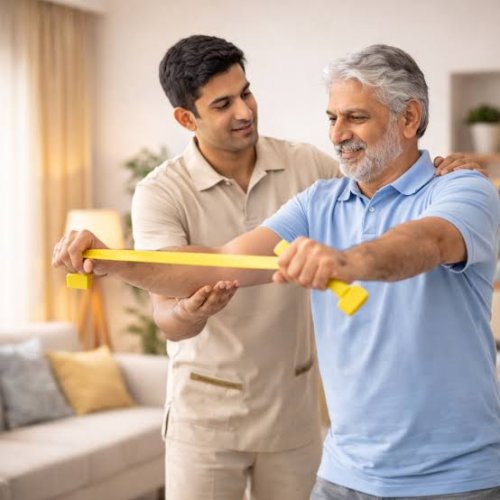
Physical Exercise Training
Physical exercises are used for people with conditions such as stroke or Parkinson’s disease to:
increase muscle strength;
improve mobility;
restore balance.
Adapting the Home Environment for Older People
This approach helps to:
increase safety;
maintain independence;
reduce the risk of falls.
Training for People with Heart Conditions
Patients are taught how to perform safe physical activities and develop healthier lifestyle habits.
Preparation for Prosthetic Use
People who have undergone arm or leg amputation receive support with:
learning how to use a prosthesis;
prosthesis development;
fitting and adjustment of the prosthetic device.
Recovery After Burn Surgery
Rehabilitation after burn surgery focuses on:
techniques that support skin healing;
reducing swelling;
restoring movement and physical function.
Rehabilitation for Cerebral Palsy
Various rehabilitation methods are used in children with cerebral palsy to:
reduce muscle stiffness;
improve movement abilities;
support greater independence.
Psychological Support
Psychological therapy is provided to help people cope with emotional and mental challenges that may occur after spinal cord injuries.